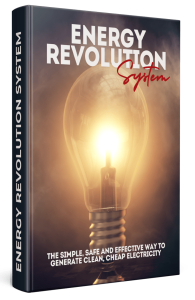
Take control of your energy
Instead of being at the mercy of rising utility prices, a properly built homemade generator lets you generate your own usable electricity from a compact system that fits in a basement, shed, or garage.
If you’ve ever wanted to build a powerful homemade generator using a little-known refinement of a Nikola Tesla–era bifilar coil, this step-by-step Energy Revolution System shows you how to assemble a compact home-power unit from inexpensive parts – and potentially cut your electricity costs dramatically while staying 100% legal.
When you buy through our links, we may earn a commission.
A homemade generator is a power system you assemble yourself using affordable parts – not a $15,000 rooftop install or a noisy gas unit that drinks fuel. The Energy Revolution System walks you through how to build a compact, Tesla-inspired homemade generator that can help power lights, fridges, TVs, computers, and more, while reducing your dependence on the grid.
Instead of being at the mercy of rising utility prices, a properly built homemade generator lets you generate your own usable electricity from a compact system that fits in a basement, shed, or garage.
Use your homemade generator design for cabins, RVs, suburban homes, or emergency backup. Whether you want off-grid resilience or just a lower bill, the same DIY blueprint applies.
The Energy Revolution System breaks the homemade generator concept down into simple steps, so you can follow along with diagrams, part lists, and safety notes even if you’re new to electricity and tools.
According to the creator, this compact homemade generator device was born from Tesla’s original bifilar pancake coil concept – refined with modern components that now cost only a fraction of what they did in the 1890s. The result is a generator design that can amplify a small electric input into significantly more usable power for everyday household needs.
The book explains how builders have reported savings of 50%, 80% or more on their power bills once the system is installed and tuned using three simple tweaks that can boost output by up to 200%. Results vary, but the goal is simple: pay a fraction of what your power company charges today by using a DIY homemade generator in your favor.
Learn how to scale the design from a pocket-sized demo up to a home-use homemade generator unit capable of feeding lights, fridges, TVs, computers, and even AC units, so you can stay comfortable without constantly worrying about the meter.
Unlike fuel generators, this design is quiet, doesn’t rely on gasoline, and isn’t bolted to your roof like solar panels. The book shows how to keep your homemade generator in your basement or yard as a portable emergency power source for storms, blackouts, and grid failures.
In 1894, Nikola Tesla patented a special “bifilar pancake coil” (patent no. 512,340) that, according to the story told in this book, could take a modest input of electricity and multiply it several times over. Shortly afterward, a mysterious lab fire wiped out much of his early research. The Energy Revolution System claims to rebuild and refine that idea using today’s inexpensive electronics – packaged into a practical homemade generator blueprint you can follow at home.
Tesla wanted a way for ordinary people to have affordable, abundant energy, not endless bills controlled by financial & utility interests. His bifilar coil experiments reportedly showed that under the right conditions, a single energy source could light many more bulbs than expected – essentially boosting output from the same input, just like a well-tuned homemade generator aims to do today.
The author claims to have lived in Tesla’s birth village of Smiljan, where local builders quietly used a variant of this coil to keep energy costs far below surrounding regions. The book reconstructs those “insider tweaks” and documents how they’re applied in a modern homemade generator build.
Using off-the-shelf parts that were unaffordable in Tesla’s day, the Energy Revolution System shows how to:
Instead of dumping schematics on you and wishing you luck, the Energy Revolution System walks you through a phased process for turning the idea into a working homemade generator:
Individual results vary. Testimonials represent personal experiences shared with the author and are not a guarantee of specific savings or performance.
The book is designed to take you from curious beginner to confident builder. You’ll know not just what to do, but why each piece of the design matters in your homemade generator setup.
Detailed written instructions covering planning, parts sourcing, coil winding, assembly, wiring, grounding, and first-run tests. Screenshots and diagrams walk you through each stage, from laying out the first component to powering your initial loads.
Printable checklists and part-number suggestions for buying everything at your local hardware or electronics shop. Includes suggested substitutions and low-cost alternatives if a specific component is out of stock.
Clear visual diagrams for both the small demo build and the larger home-scale homemade generator unit, showing exactly how to route cabling, connect the coil, and safely tie into your power management hardware.
The three core tuning tweaks the author says are responsible for the biggest jumps in output – plus how to diagnose common issues like under-performance, wiring noise, or unstable loads in your homemade generator system.
Suggestions for using your generator as a backup power source in blackouts, storms, or grid disruptions – including how to prioritize critical devices like fridges, medical gear, and communication devices.
When the author refines the design with new components or
improved circuits, updated plans are made available to owners of
the latest version of the system.
*As described in the original offer; check the current sales
page for details.
Access the complete step-by-step guide, illustrations, and blueprints that show you how to build your own Tesla-inspired homemade generator and start reducing your dependence on the grid.
Yes, I Want the Energy Revolution System →
No formal training is required to read the book or assemble the demo-scale homemade generator unit. The instructions are written for regular homeowners and DIYers. That said, whenever you’re unsure about wiring, grounding, or tying a system into your home’s electrical panel, you should consult a licensed electrician and follow local codes.
The author reports that experienced builders can assemble a small demonstration unit in as little as about 43 minutes. Expect longer if you’re new to tools or electricity. The book is designed so you can work at your own pace and test as you go while building your homemade generator.
Some users report savings of 50–80% or more on their electricity costs. Completely replacing your bill depends on how much energy you use, how well you build and tune the system, and how you integrate it with your home. Think of it as a powerful way to reduce your dependence on the grid, not magic.
The underlying concept – building your own homemade generator – is generally legal, but every region has its own codes and requirements. The book emphasizes using the system in legal, responsible ways. Always check local regulations and work with a professional if you plan to tie the system into house wiring.
Yes – one of the main selling points of the Energy Revolution System is that it can act as a quiet backup generator during grid failures, storms, or power outages, keeping essential appliances and devices running without fuel, fumes, or noise.
The author claims that even seniors and complete beginners have successfully built working homemade generator systems by carefully following the diagrams and instructions. If you can follow a cookbook and handle basic tools, you can treat this as a learn-as-you-go project – and bring in a friend, neighbor, or electrician if you want a second pair of hands.